
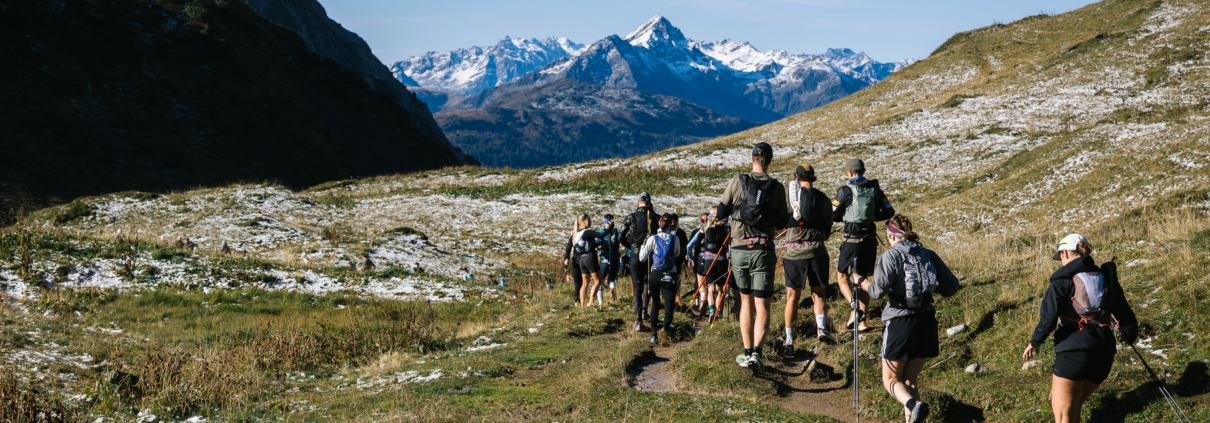
There are exactly two weeks left until the starting gun. Your legs are getting restless, a phantom ache suddenly twinges in your knee, and that quiet, nagging voice in your head starts whispering: “Did I really do enough? Shouldn’t I squeeze in one last hard long run just to be sure?”
Giving in to that voice is the ultimate trap right before race day: panic training. The biological bill is paid immediately. You cannot build fitness in the final 14 days – you can only destroy it. Squeezing in a brutal workout now guarantees you won’t step up to the line as a fully charged rocket, but as a burned-out shell with empty fuel tanks and a fried nervous system.
The secret to the final days is brave restraint – combined with sharp precision.
7-Stage TAR vs. RUN2: Two Completely Different Strategies
How you approach this final stretch depends heavily on your race format:
- For the 7-Stage Transalpine Runners: Tapering is your survival insurance policy. You are building a deep biological buffer because you will be demanding peak output seven days in a row. Your legs should feel slightly heavy or soft right before the start – that is simply the water stored alongside your fully topped-off glycogen reserves.
- For RUN2 Starters: You are heading into a 48-hour sprint to the finish. You need explosive freshness from minute one. Your volume cut can be more aggressive so you can bring maximum dynamic power to the trails from Lenzerheide to Ilanz.
To ensure your muscles don’t go completely “to sleep” in either format, give your body one tiny spark exactly two days before the start: four short, explosive 20-second hill sprints. That’s all it takes to wake up your nervous system and load your tendons like a coiled spring.
Team vs. Solo: The Decisive Advantage
- For Teams: Racing a multi-stage event as a duo is pure psychology. Use these final 14 days to tune your communication, not just your legs. Agree on the playbook ahead of time: Who leads on the steep climbs? How do you signal fatigue without creating friction? The strongest team isn’t the one with the fastest individual runner – it’s the one with the smartest shared strategy.
- For Solo Runners: You don’t have a partner to pull you through a dark patch, but you also don’t have to adapt to anyone else’s rhythm. Your biggest job is honest self-regulation. Don’t let the starting line adrenaline drag you into someone else’s race. You are your own tactical director.
The Most Honest Diagnostic Lab on Earth
Once the starting gun goes off, the Swiss Alps become the most honest mirror you will ever hold up to your running. What remains on your watch after crossing the finish line is the real treasure for your future in the mountains. Your body writes an undeniable record along the way:
- Your Cooling System: Why does your heart beat faster during the second half of a stage even though your pace hasn’t changed? It reveals precisely how efficiently your system manages heat and fluid loss.
- Your Honest Speedometer: What does your actual running speed look like when you strip away the steep incline? The numbers reveal without mercy whether you paced the climbs with discipline or let early crowd energy burn through your fuel reserves.
- Your Digestive Filter: How reliably does your gut process carbohydrates when operating under hours of high-altitude physical stress?
You take far more home from these trails than just the memory of crossing the finish line. You unlock a deep, practical understanding of your own body – returning home as a smarter, far more resilient trail runner for every mountain adventure ahead.
